
application area:
Related products:
textile field
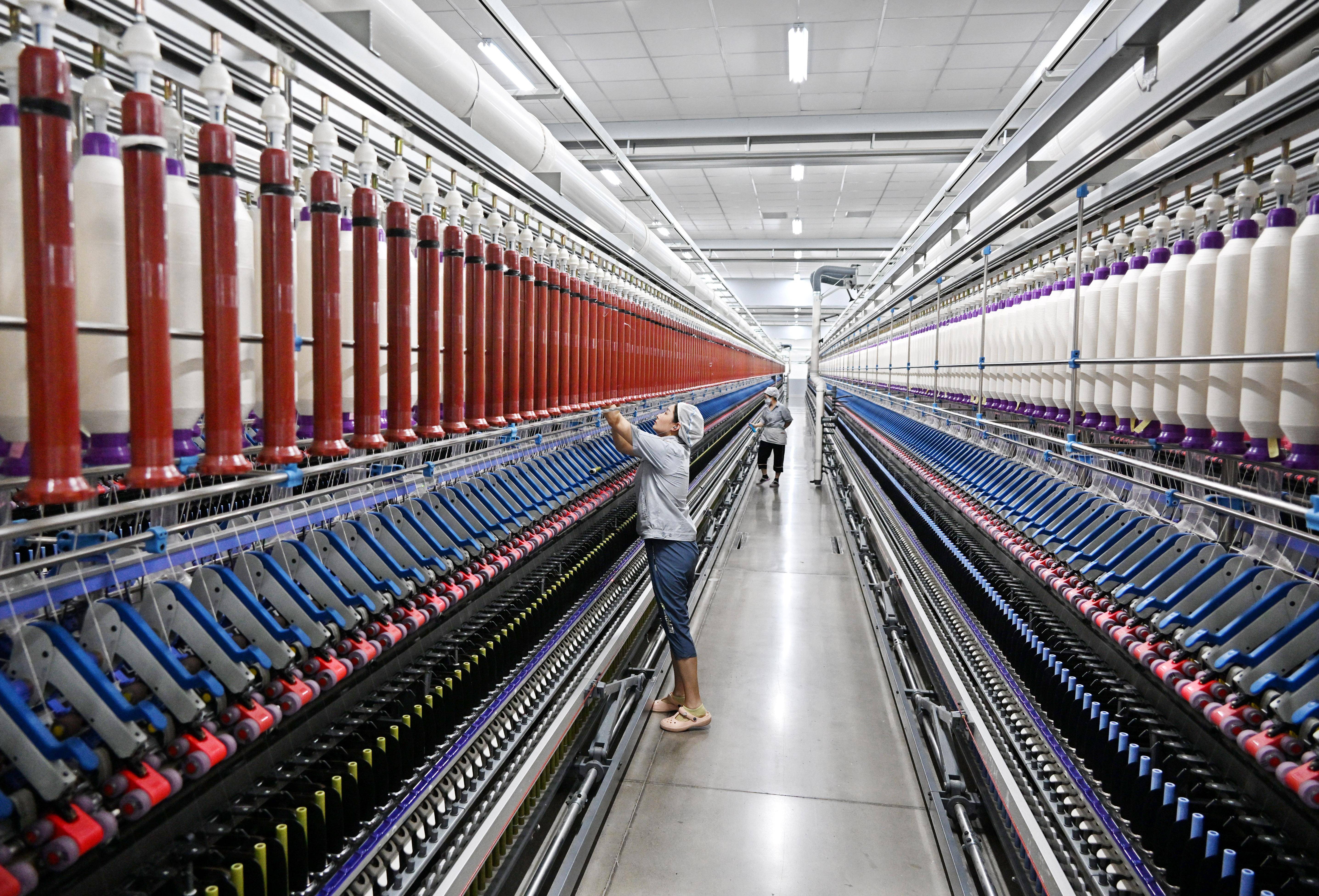
In the textile field, bearings are pivotal components that significantly influence the performance and productivity of textile machinery. Deep - groove ball bearings, thin - wall bearings, and miniature bearings each play unique and essential roles.
Deep - groove ball bearings are widely applied in the high - speed rotating parts of textile machinery, such as the main spindles of spinning machines and the rollers of carding machines. In spinning machines, high productivity and precision are crucial. Deep - groove ball bearings need to meet strict requirements. To achieve this, manufacturers develop deep - groove ball bearings with specific characteristics. For example, in order to ensure the high - speed and stable operation of the spinning machine's main spindle, and to reduce the defect rate of spun yarn, these bearings require high stability. They should be able to continuously operate at high speeds to guarantee production efficiency.
Deep - groove ball bearings used in textile machinery are designed to withstand high rotational speeds and maintain a constant temperature during long - term operation. A low and constant rotational torque, along with weight reduction through optimized design, are also key factors in ensuring that textile manufacturers obtain high - quality products. Their excellent quality results in a very low maintenance level.
Thin - wall bearings are mainly used in the precision components of textile machinery where space is limited, like the fine - adjustment mechanisms of looms and the rotating parts of embroidery machines. Thin - wall bearings are a type of bearing that can bear complex loads. They can simultaneously withstand relatively large axial and radial loads, as well as tilting moments. Generally, thin - wall bearings are equipped with installation holes, which make the design of the host machine more compact, the guidance simpler, and the maintenance easier. For instance, in the fine - adjustment mechanism of a loom, the performance of thin - wall bearings is of utmost importance. Qualified thin - wall bearings for looms have the following characteristics:
A low and constant rotational torque to ensure smooth adjustment.
The ability to meet the requirements of high - speed operation to keep up with the weaving speed.
Lightweight, which helps reduce the overall weight of the loom without sacrificing performance.
Minimal axial and radial run - out to ensure the precision of weaving patterns.
Miniature bearings are applied in the micro - drive systems and control components of textile machinery, such as the small motors of automatic bobbin changers and the sensors of textile quality control devices. Miniature bearings can be used in many machines on the textile production line, including winding machines, warping machines, and inspection machines.
———